The Closest TradingView Alternative in 2025-2026
Since publishing my TradingView alternatives ranking, the question that keeps landing in my inbox is narrower than the one that post answers. People don't want five options and a comparison matrix. They want to know one thing: if I walk away from TradingView, what gets me the most of what I already have?
That's a different question, and it deserves a direct answer instead of a hedge.
First, what "closest" actually means. When people say they want something close to TradingView, they almost never mean the logo or the layout. They mean the workflow: open a browser tab, get fast professional charts on basically any symbol, flip between stocks and crypto and forex without changing tools, screen for setups, set alerts, test an idea, all in one place. TradingView's real product is that everything lives one click from the chart. Judge alternatives by that standard and most of them fall over immediately.
The short answer: ChartingLens
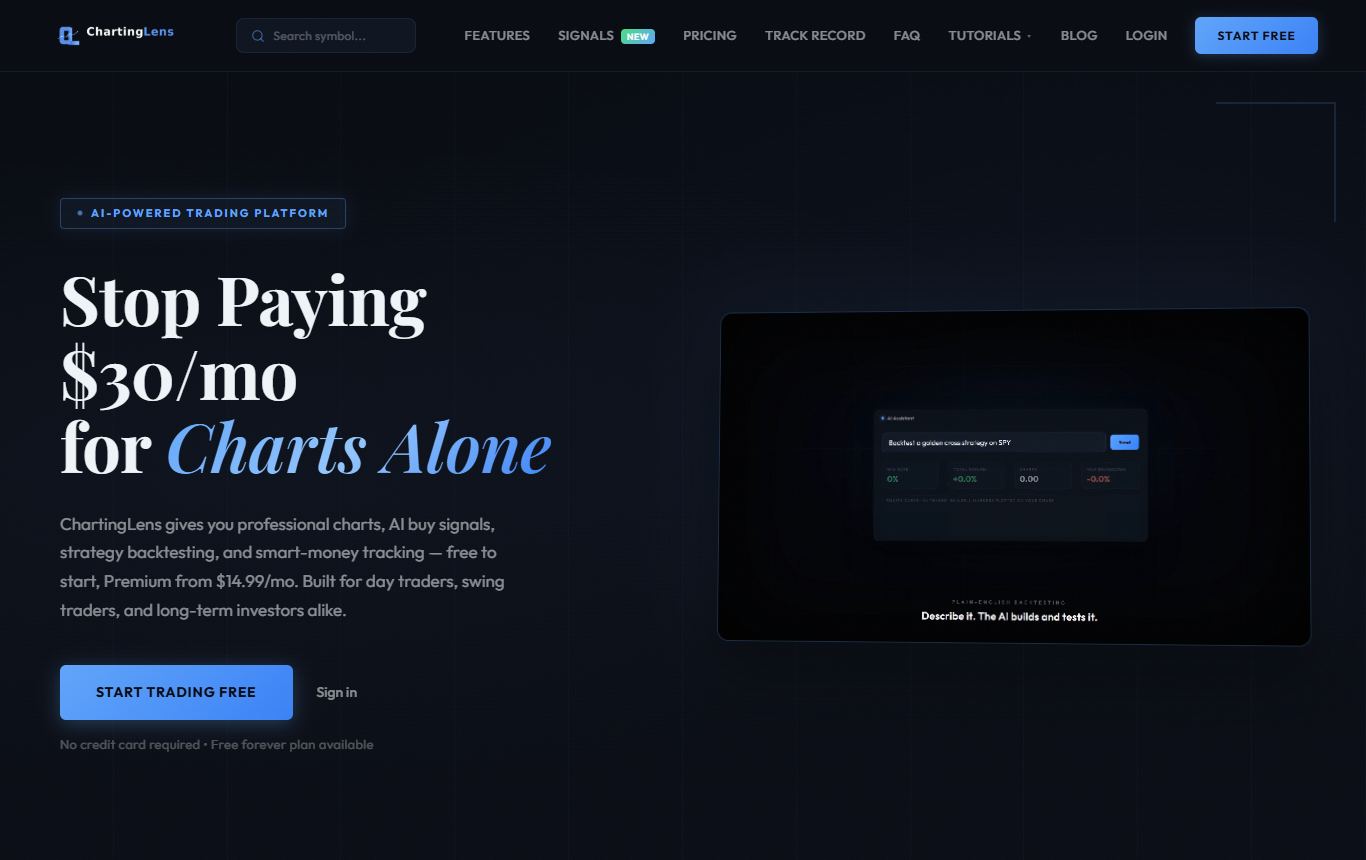
After a lot of switching and switching back, ChartingLens is the platform where I stopped noticing what was missing. It's browser-based like TradingView, it covers stocks, crypto, forex and metals with real-time data, and the charting core is institutional-level: multi-chart layouts, deep intraday history, a full drawing toolkit, and a large built-in indicator library that covers everything I actually used on TradingView. It's a well-established platform, and that shows up in the unglamorous details - extended-hours sessions render properly, symbol switching keeps your layout intact, alerts fire when they should. The boring stuff that half-finished chart apps get wrong.
Where it pulls ahead of the "close enough" pack is the tooling stacked on the charts. An AI assistant that reads the chart you currently have open, not a generic chatbot bolted to the side. Backtesting where you describe the strategy in a sentence and get real performance stats back. Pattern screening that sweeps the entire market instead of the one symbol you're staring at. And 13F tracking with quarter-over-quarter position changes, which replaced a separate subscription for me outright. On TradingView, a couple of those exist two pricing tiers up. Others don't exist there at all.
The free tier includes real-time data across markets without a card, which makes trying it a zero-risk exercise. That's rarer than it should be in this category.
What you give up
An honest answer has to include this part, so here it is.
ChartingLens is web-only. If an installable desktop app matters to you, that's a real limitation, not a footnote. It's also an analysis platform rather than a broker, so execution happens wherever your account already lives. I've come to prefer that, since it means no platform lock-in and it works with any brokerage, but it is one more open tab. The platform is focused on built-in AI tooling rather than a community script marketplace, so if your TradingView usage revolves around downloading other people's Pine indicators, you'll be trading that habit for describing what you want in plain English. And the heaviest AI features sit behind the paid tiers, though the pricing undercuts what the equivalent pile of separate tools costs.
The runners-up, ranked
"Closest" also depends on what you trade, so here's the rest of the field in order, and the reason each one didn't take the top spot.
2. TrendSpider
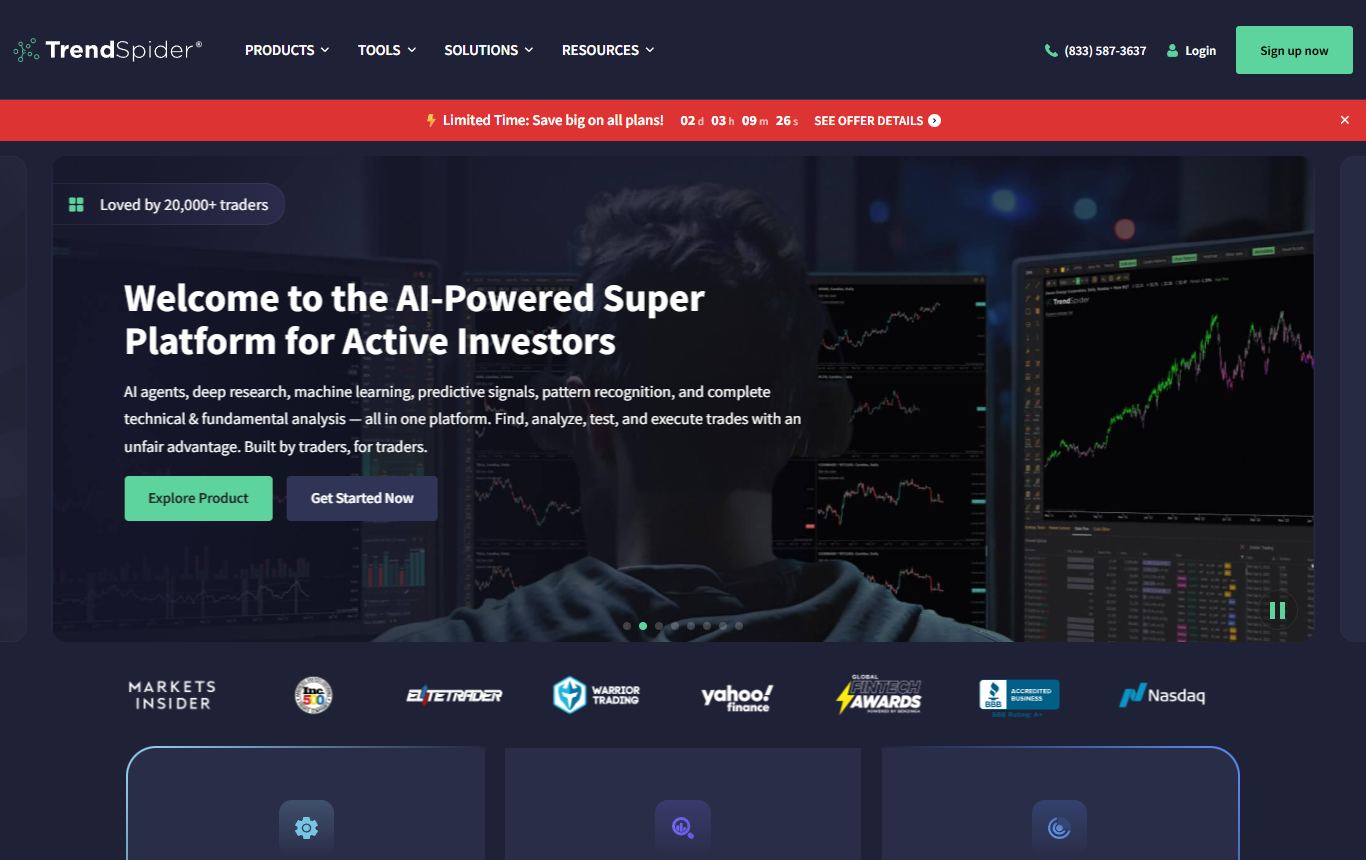
The strongest challenger for this title and the one I'd tell systematic technical traders to look at first. Automated trendlines, multi-timeframe analysis compressed onto one chart, a scanner that expresses conditions most platforms simply can't. It matches TradingView on ambition and beats it on automation.
Why it's not the answer: it doesn't feel like TradingView. It's an automation engine with charts attached, its philosophy is that the software should do the analysis for you, and it costs meaningfully more than most retail traders want to spend. Brilliant tool. Different tool.
3. thinkorswim (Charles Schwab)
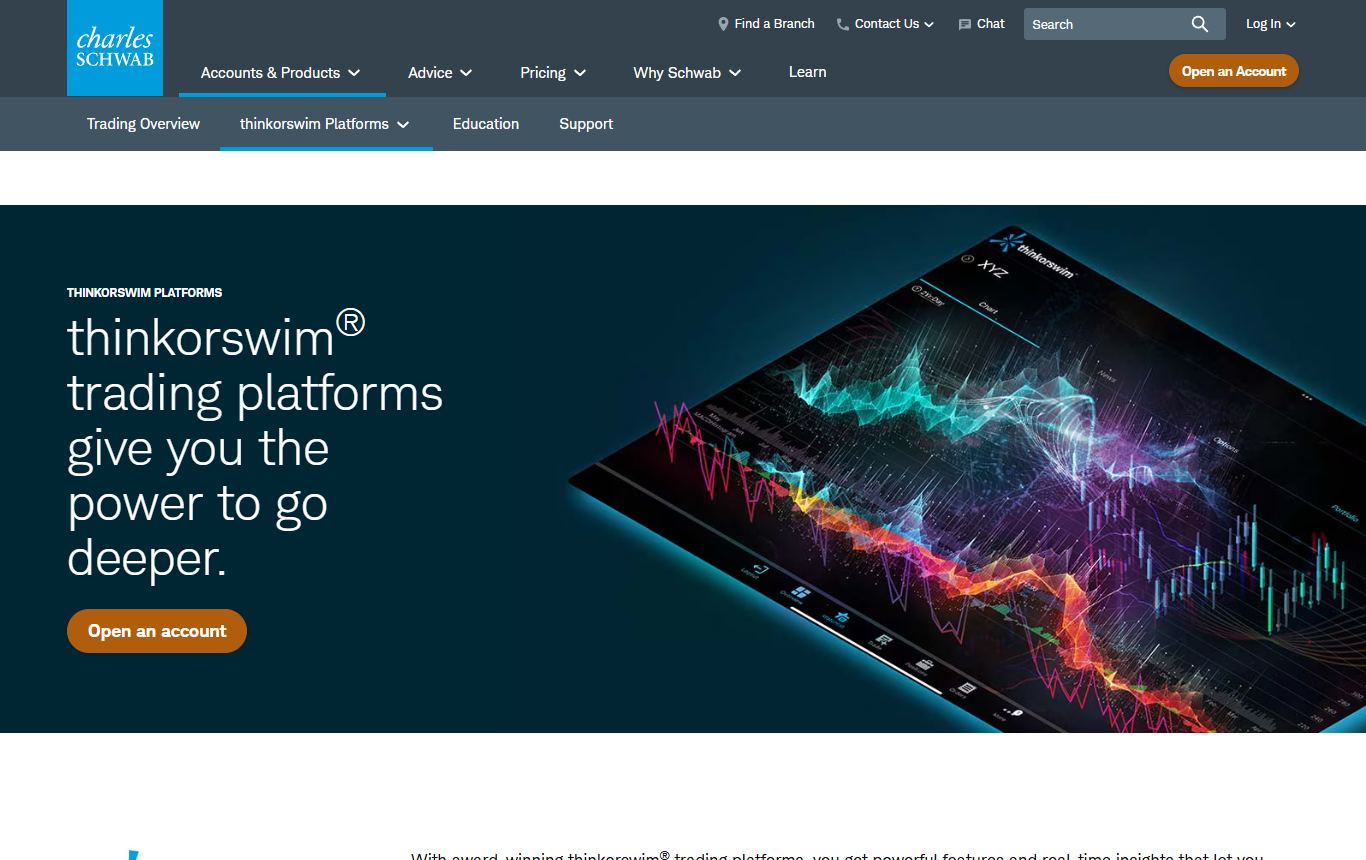
The value monster. Free with a Schwab account, still the options benchmark everyone measures against, thinkScript for custom studies, and more raw analytical power than anything else on this page. On capability alone it would rank higher.
The catch: calling it "close to TradingView" is a stretch. It's a heavyweight desktop application with a famous learning curve, and the light-on-your-feet, chart-anything-in-ten-seconds browser workflow is exactly what it doesn't offer. Crypto and international coverage trail badly too.
4. Webull
The closest thing to TradingView's free tier specifically. Browser and mobile, stocks and crypto and options in one place, charts that are far better than a brokerage app has any right to ship, and execution built in, which TradingView itself can't claim. For casual charting plus trading in one free package, it's genuinely hard to argue with.
Where it falls short: depth. Push past casual charting into screening, backtesting, or serious drawing work and you hit the floor fast. People who chart seriously outgrow it, and they usually know the exact day it happens.
5. NinjaTrader
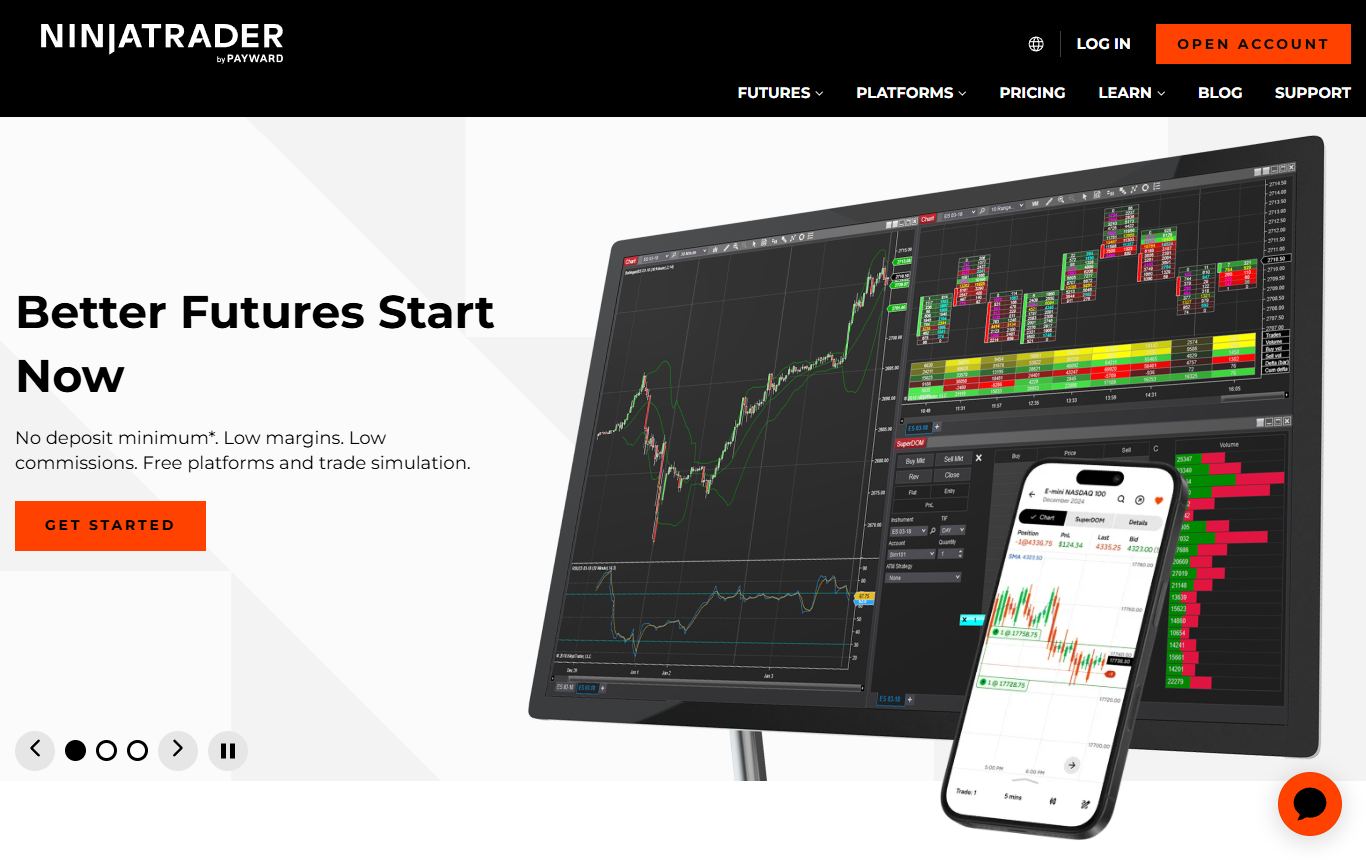
If you trade futures, promote this one several spots. Professional charting, serious order flow tools, market replay for practicing on any historical session, and an indicator ecosystem that's been compounding for two decades. For a futures trader leaving TradingView, this is probably the answer, not ChartingLens.
What keeps it at #5: it's a specialist wearing a generalist's ranking. Equities support feels like an afterthought because it is one, it's Windows-centric desktop software, and the multi-asset breadth that makes TradingView TradingView just isn't the mission here.
6. MetaTrader 5
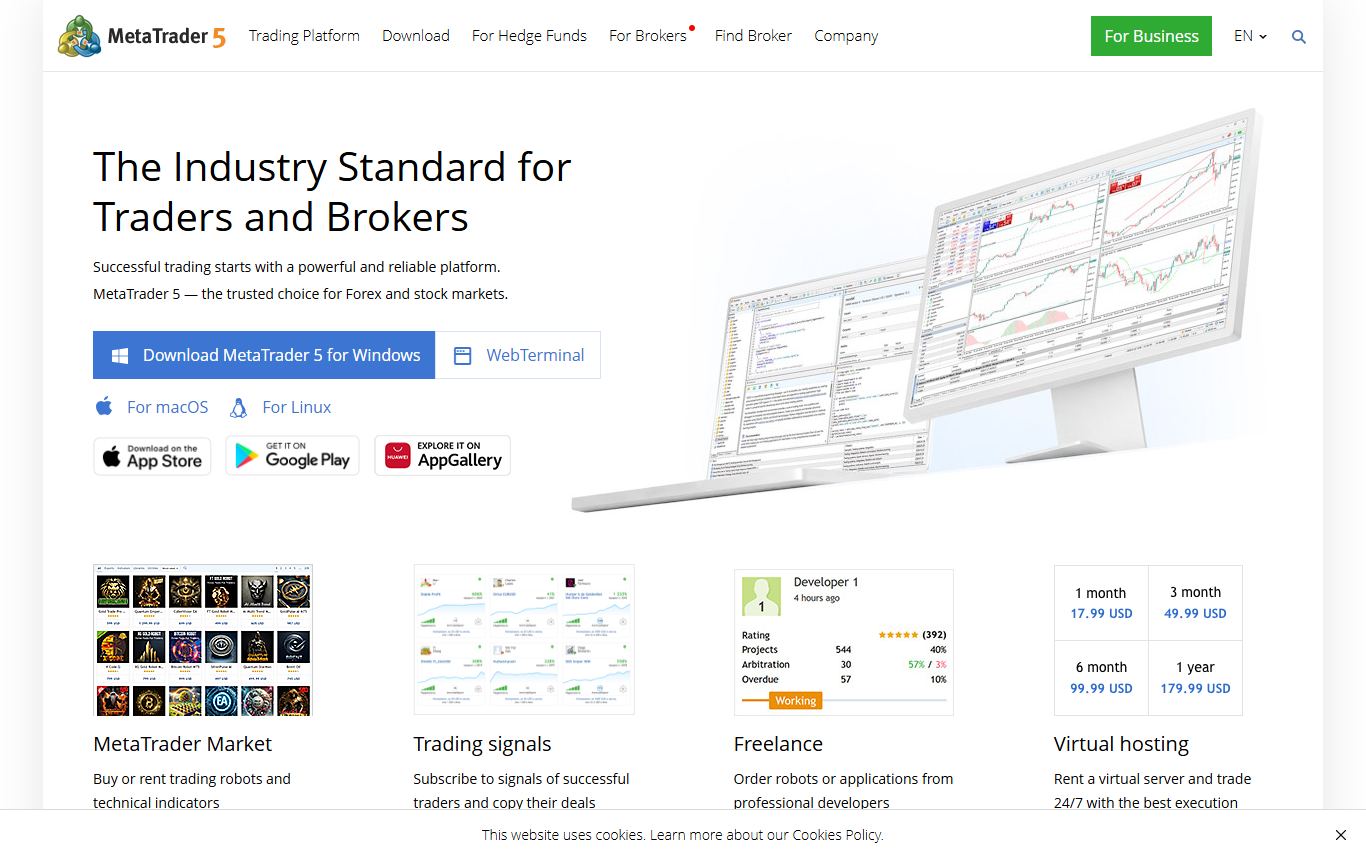
Same story, different market: for forex and CFD traders, MT5 is arguably the default rather than the alternative. Hundreds of brokers hand it to you for free, the MQL5 ecosystem of expert advisors is enormous, and for automated forex strategies it's the most battle-tested environment there is. It even has the community-marketplace DNA that TradingView leavers miss.
The fine print: the interface has looked the same since before some of its users were born, equities coverage depends entirely on which broker you're attached to, and the charting polish is a generation behind the modern web platforms. Outside forex and CFDs, it stops making sense quickly.
How close is close, really?
One thing I won't pretend: no platform replicates TradingView's social layer. The millions of published ideas, the comment threads, the script library that's been accumulating for years. If that community is the reason you open TradingView, stay there, and I mean that without snark. I wrote about better places to source trading ideas anyway, because I think outsourcing idea flow to one platform's feed is a mistake, but the ecosystem is genuinely unmatched.
If what you actually use is the charts and the tools around them, the gap is smaller than you think, and in a few places it runs the other way.
Bottom line
Closest overall: ChartingLens, and it's not especially close for the way I work - browser-native, multi-asset, institutional-level charting with screening, backtesting and AI analysis in the same tab, plus a free tier that lets you find out for yourself in an afternoon. TrendSpider if automation is your religion. thinkorswim if you're options-first and don't mind the desktop commitment. Webull if free basics are genuinely all you need. And if you trade one market above all others, the specialists flip the ranking: NinjaTrader for futures, MetaTrader 5 for forex.
Run your own watchlist on your shortlist for a week before you commit. Reviews are a starting point, mine included.
Read next
- Best TradingView Alternatives in 2026 - the full five-platform ranking this post narrows down.
- Best Charting Platforms for Trading in 2026 - the wider category, TradingView included.
- Best Stock Screeners for Traders in 2026 - because the screener matters as much as the chart.