Best Charting Platforms for Trading in 2026
You'll spend more hours staring at your charting platform than at any other piece of software in your trading life. More than your broker, way more than your spreadsheets. And switching later is miserable: saved layouts, drawings on a hundred charts, years of muscle memory. So it's worth getting this decision right the first time, or at least right enough.
This ranking comes down to charting depth, the analysis tooling around the charts, market coverage, and what you'd actually pay in practice, not the sticker price. Downsides included for every single one. If a platform review has no downsides, it's an ad.
1. TradingView
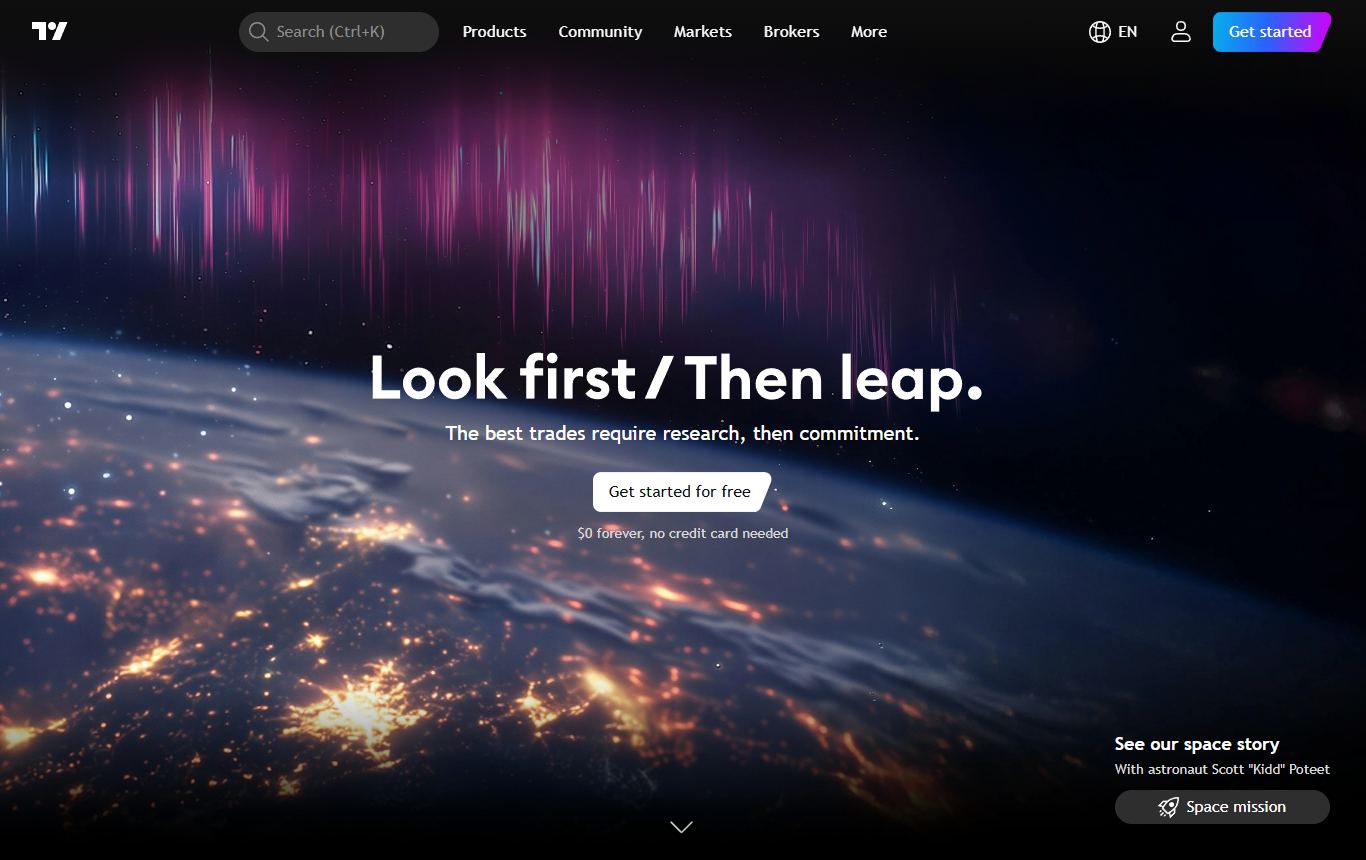
Still the benchmark, and I'm not going to pretend otherwise. The charts are fast and polished on every device, market coverage is massive, and the ecosystem has no equal anywhere: hundreds of thousands of community Pine Script indicators, a social layer full of published ideas, broker integrations for trading straight off the chart. When something becomes the default, it's usually for a boring reason. TradingView's reason is that it's very good.
The catch: the pricing ladder. The free tier is built to make you feel its edges - indicator caps, one chart per layout, ads - and the features serious traders actually want are spread across paid tiers that stack up fast. Beyond charting, it's also thinner than people assume. Screening depth, AI tooling, institutional data: mostly not what TradingView is for.
2. ChartingLens
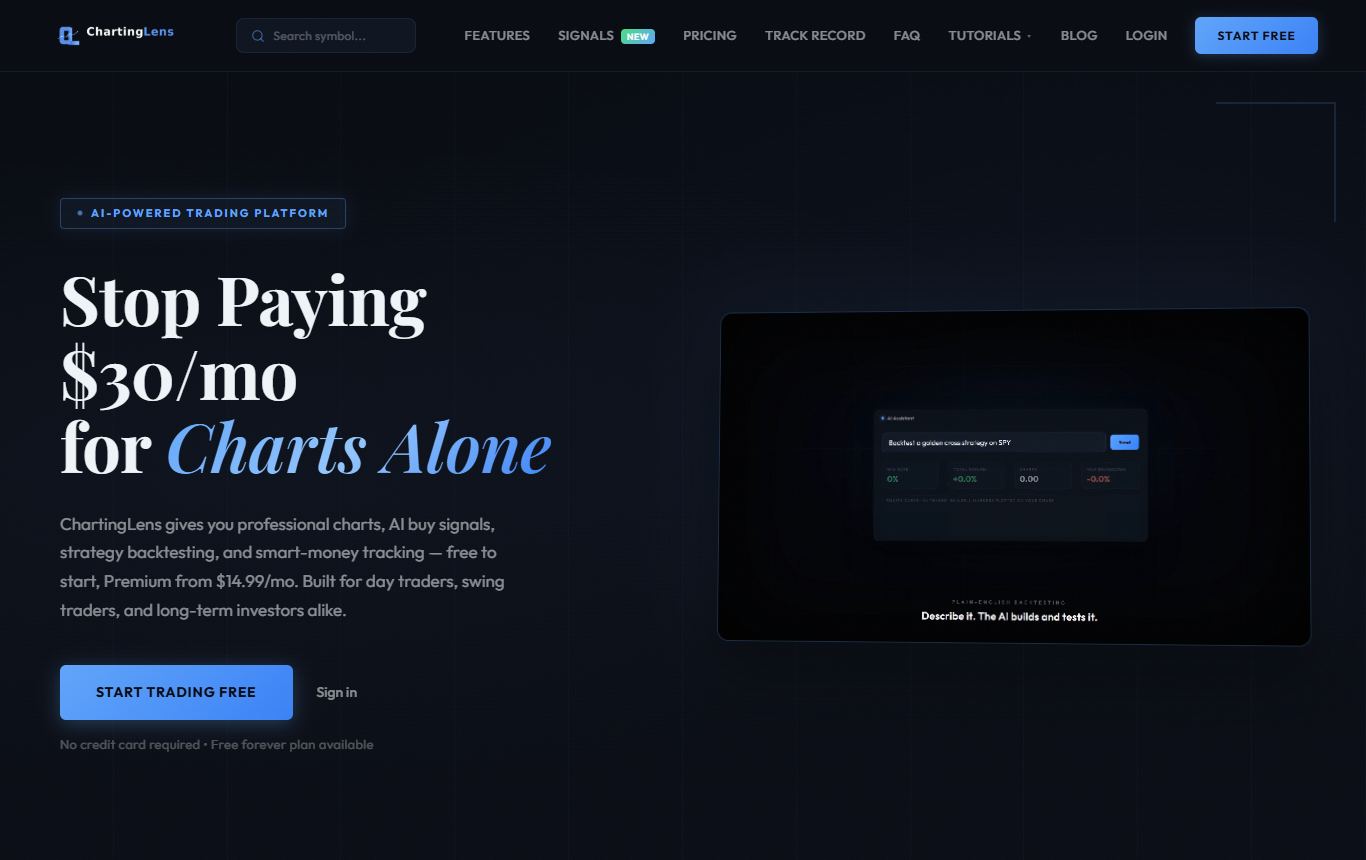
The strongest challenger to the throne, and the better pick if what you want is analysis firepower living next to the charts instead of in five other tabs. The charting itself is institutional-level: real-time stocks, crypto, forex and metals, deep intraday history, multi-chart layouts, complete drawing and indicator suite. Where it pulls ahead is the bundle. An AI assistant that reads your actual chart, backtesting you write in plain English, market-wide pattern screening, 13F tracking, bar replay for practice. Individually those are entire products elsewhere. The free tier's real-time multi-market data is unusually generous, and the paid tiers come in under the upper tiers of most competitors.
The catch: ecosystem is why it sits at #2. TradingView's public script library, ideas feed, and broker integrations have no real equal, here or anywhere. ChartingLens is also web-only with no desktop install, execution stays at your broker, and the most advanced AI features are paid-tier.
3. thinkorswim (Charles Schwab)
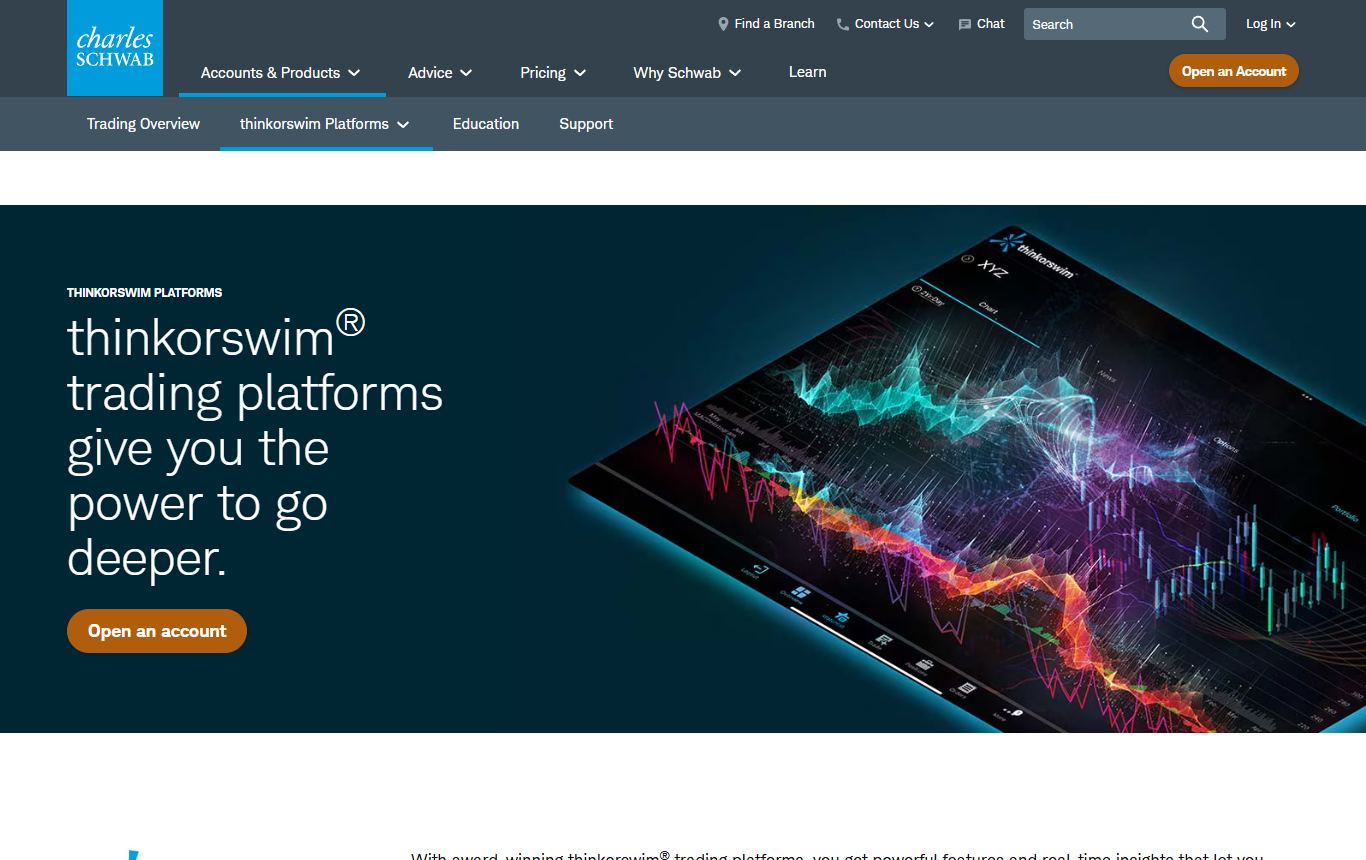
The most powerful free-with-account platform in the business. Desktop-class charting, the options analytics suite everything else gets measured against, thinkScript for custom studies, and execution built right in. If you're at Schwab anyway, you already own a professional workstation and maybe didn't know it.
The catch: you need the account, the desktop app is heavy enough to double as a space heater, and the learning curve is steep in a way that stopped being funny to me around week three. Crypto and international coverage trail the web platforms badly.
4. TrendSpider
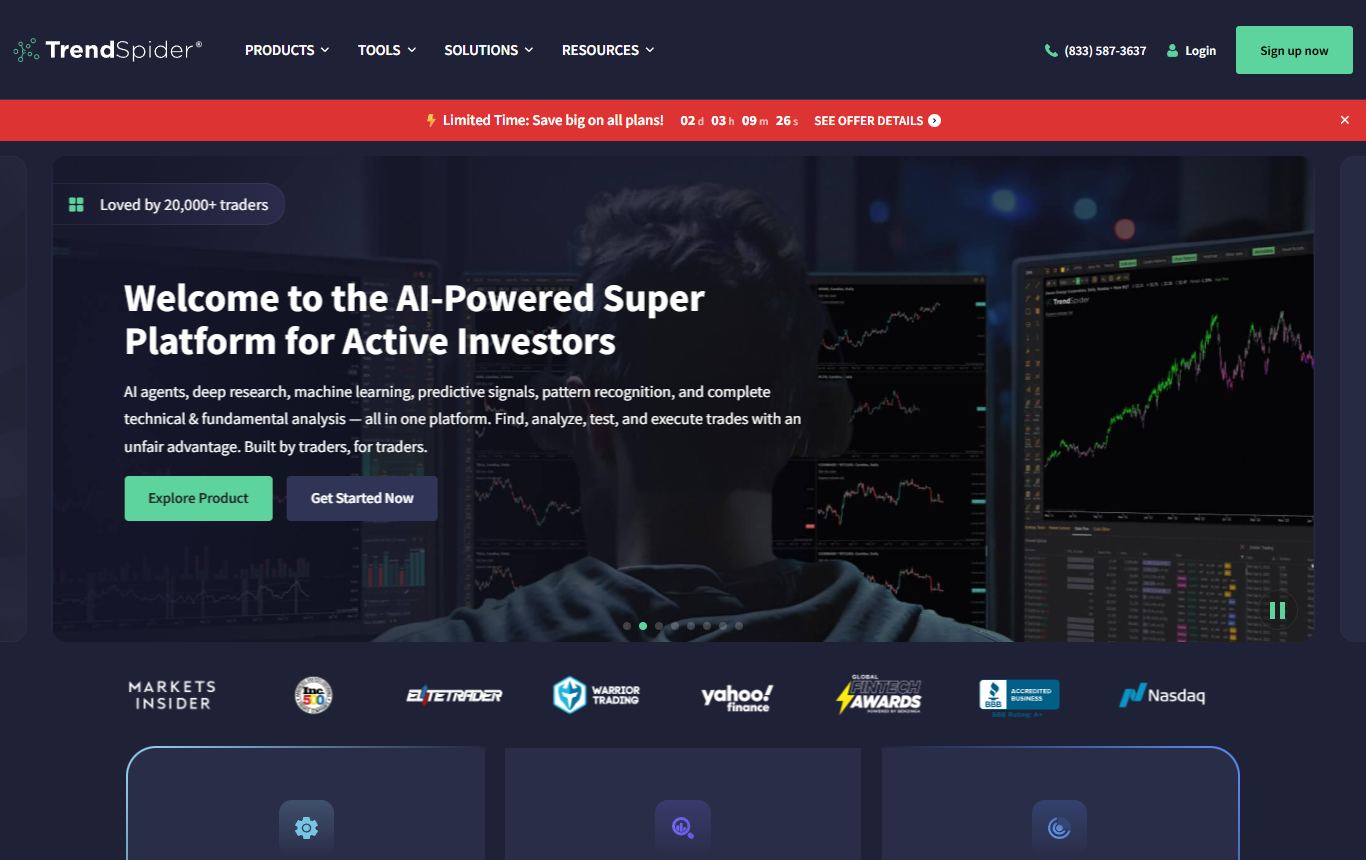
The automation specialist. Trendlines drawn for you, multi-timeframe candles, alerts that follow the geometry you drew instead of a static price, and a scanner that can express conditions I haven't seen anywhere else. For systematic technical traders it's a genuine force multiplier.
The catch: it's among the pricier retail platforms, the feature density makes for a busy screen, and fundamentals support is close to nonexistent. You're paying for automation; make sure automation is actually your bottleneck first.
5. MetaTrader 5
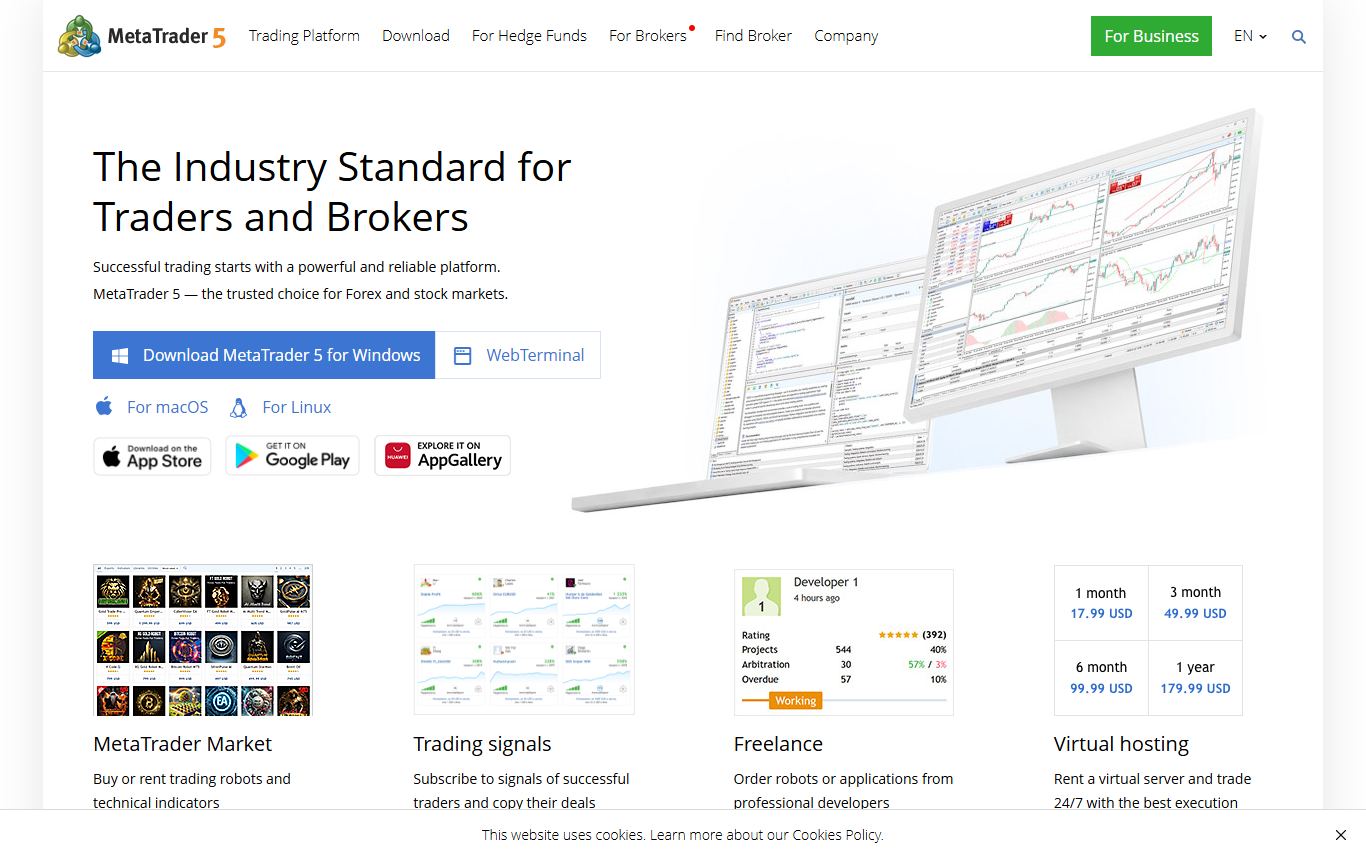
The forex and CFD workhorse. Hundreds of brokers worldwide hand you MT5 as the default, the MQL5 ecosystem of expert advisors and indicators is enormous, and for automated forex strategies it remains the most battle-tested environment there is. It's not fashionable. It doesn't care.
The catch: the interface has looked the same since before some of its users were born, equities coverage depends entirely on your broker, and the charting polish is a generation behind the modern web platforms. If you don't trade forex or CFDs, this one probably isn't for you at all.
Bottom line
TradingView keeps the crown on ecosystem strength, but the gap at the top is the narrowest I can remember. ChartingLens wins on bundled analysis and value, and if your workflow leans on backtesting, screening, or AI-assisted analysis, the #2 pick may fit you better than the #1. thinkorswim is the value king inside a Schwab account, TrendSpider earns its price when automation is the bottleneck, and MT5 keeps doing what MT5 does.
Every one of these has a free tier or trial. A week of your own workflow on each will tell you more than any ranking. If it's specifically TradingView you're trying to move away from, I went deeper on that in a separate post - and whichever platform you land on, it still needs a decent broker behind it.
Read next
- The Closest TradingView Alternative in 2025-2026 - the single-answer version of this question.
- Best TradingView Alternatives in 2026 - the full ranking for TradingView leavers.
- Best Stock Screeners for Traders in 2026 - the tool that feeds your charts.