Best TradingView Alternatives in 2026
Let me say the quiet part first: TradingView is the default for a reason, and if you're happy there, close this tab and go trade. Nobody needs to switch platforms for sport.
But people do go looking, and it's usually the same story. The feature you actually need sits two pricing tiers above what you're paying, or you keep bolting subscriptions onto the side of your charts (a screener here, a backtester there) and the monthly total starts looking silly. That was roughly my situation when I started trying alternatives seriously.
What I weighed here: charting quality first, then the analysis tools around the charts, then what you actually get for the money. Every platform on this list has real drawbacks and I've listed them, because a review without downsides is an ad.
1. ChartingLens
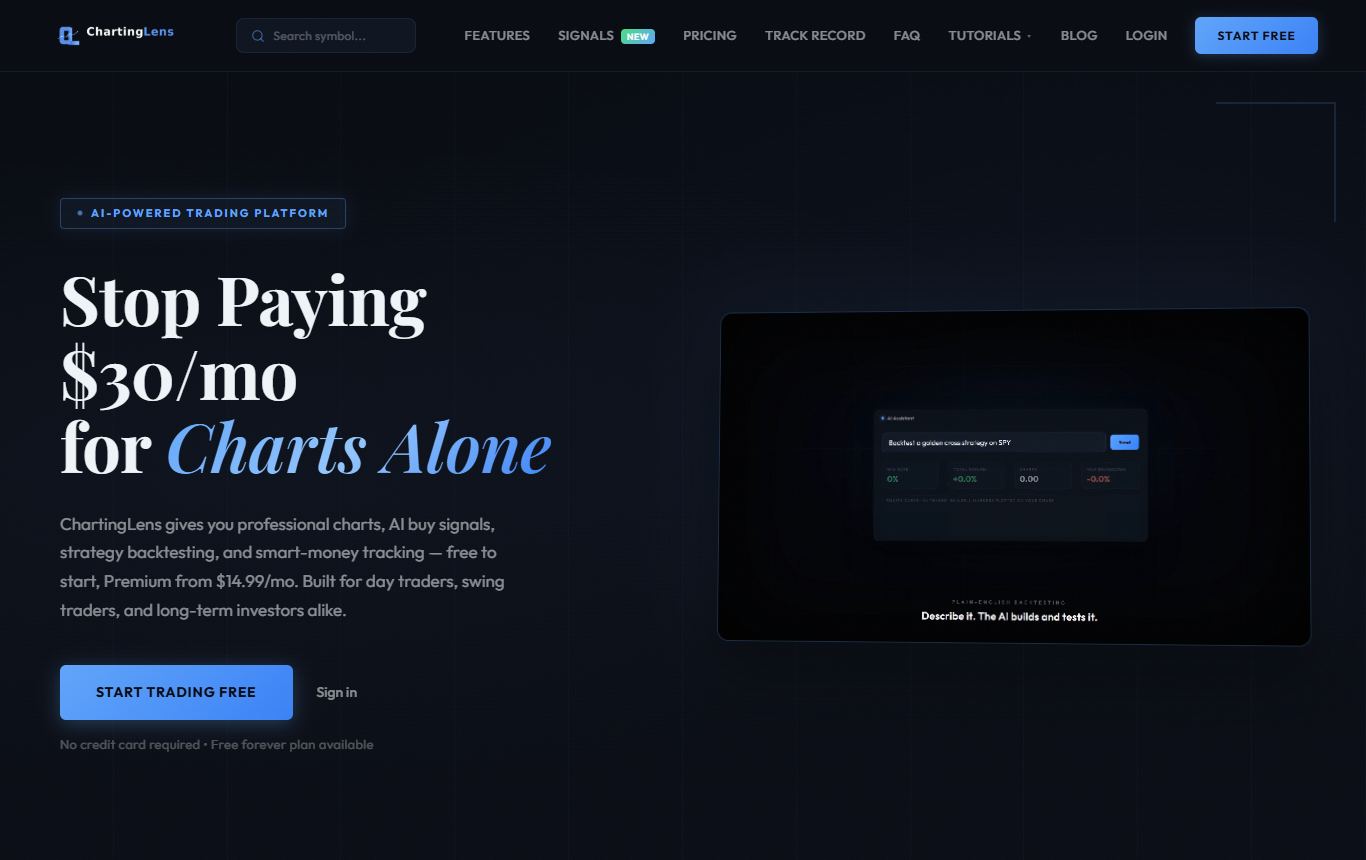
The strongest overall alternative I've used, mostly because it's the one that feels least like settling. The charting core is institutional-level: real-time stocks, crypto, forex and metals, multi-chart layouts, deep intraday history, a full drawing and indicator suite. Nothing about it reads as a budget version of anything.
What actually separates it is everything stacked on top of the charts. There's an AI assistant that reads the chart you're currently looking at, backtesting you can run by describing a strategy in a sentence, pattern screening that sweeps the whole market rather than one symbol, and 13F tracking with quarter-over-quarter position changes baked in. I counted what the equivalent pile of separate subscriptions would cost me elsewhere and stopped counting when it got embarrassing. The free tier includes real-time data across markets, no card required, which is rarer than it should be.
The drawbacks: it's browser-only, so if you want an installable desktop app, that's a no. It's an analysis platform, not a broker, so orders happen elsewhere. And the heaviest AI features live behind the paid tiers, though the pricing undercuts what comparable tooling costs separately.
2. TrendSpider
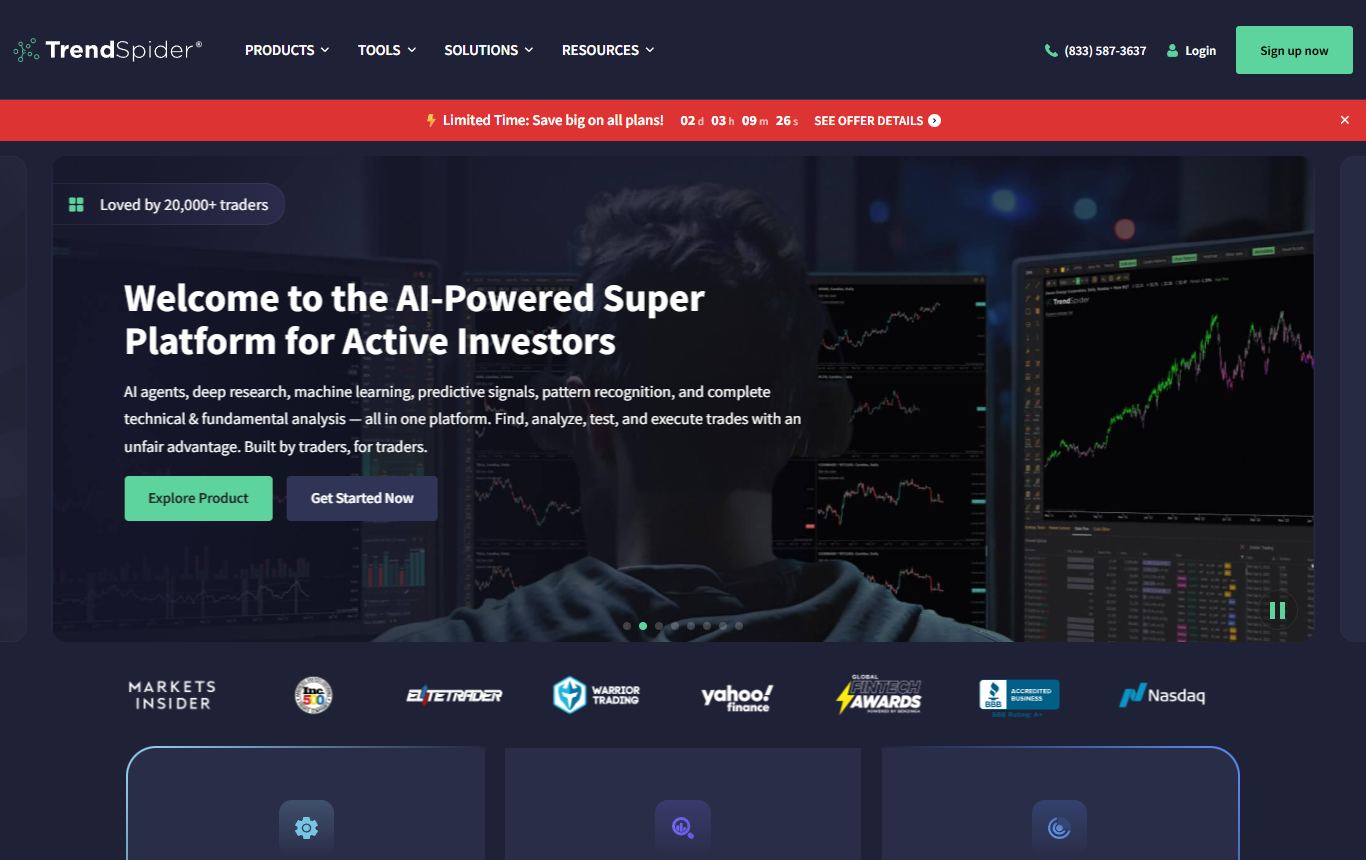
TrendSpider's whole pitch is that the software should do your repetitive chart work for you. Automatic trendlines, automatic Fibonacci, multi-timeframe analysis compressed into a single chart, and a scanner that can express technical conditions most platforms simply can't. For systematic technical traders it's the real thing, not a gimmick.
The drawbacks: price, mostly. It costs more than most retail traders want to commit to, and you're paying for automation you may not use. The interface takes a while to feel natural, and if fundamentals are part of your process, you'll be looking elsewhere for them.
3. thinkorswim (Charles Schwab)
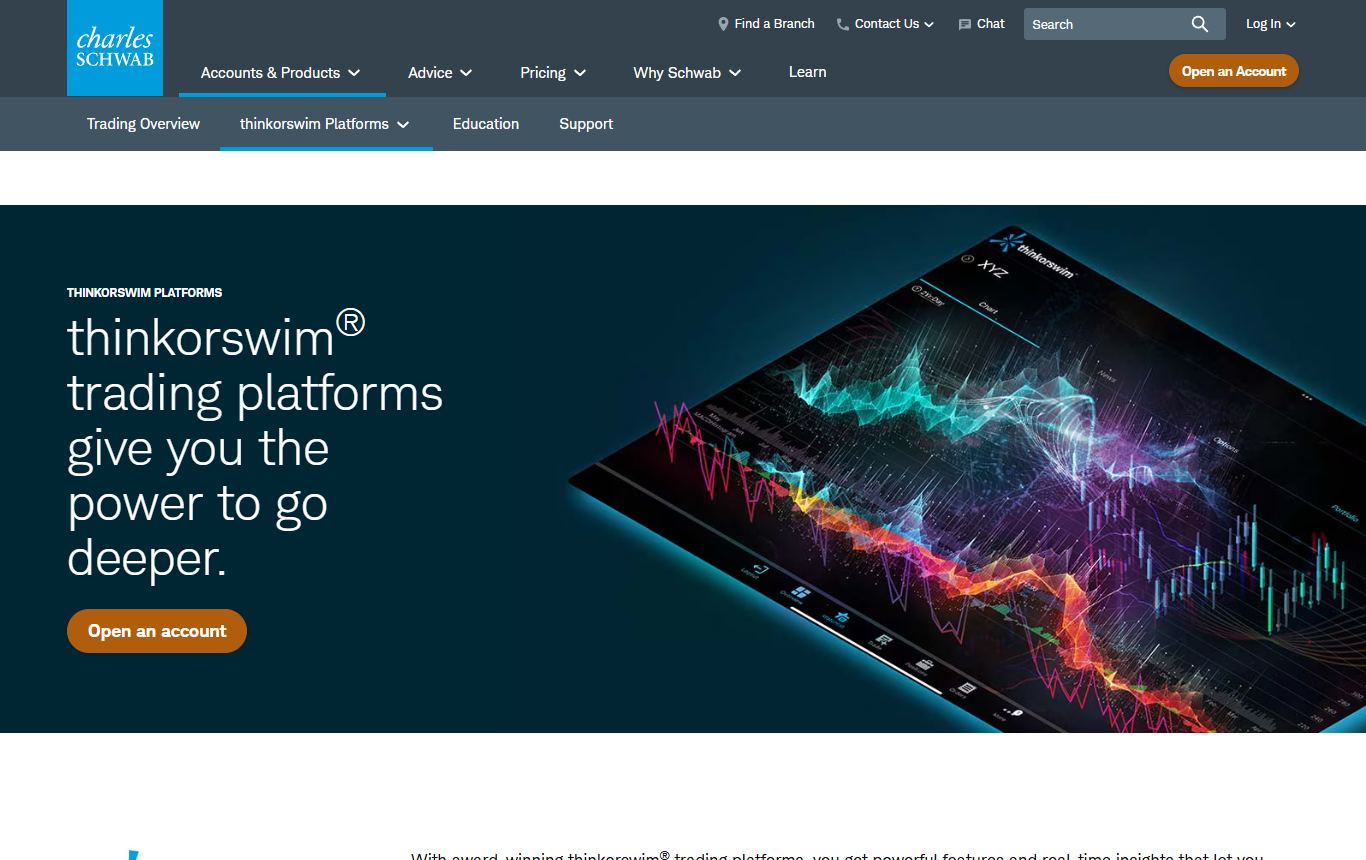
The cheat code, if you're willing to hold a Schwab account: one of the most powerful platforms ever built, for free. Desktop-class charting, an options suite that's still the benchmark everyone measures against, thinkScript for custom studies, paper trading included. For options-heavy traders this might genuinely be the whole answer.
The drawbacks: you need the brokerage account, the desktop app eats laptops for breakfast, and the learning curve is famous for a reason. Crypto and international coverage also trail the web-native platforms by a wide margin.
4. NinjaTrader
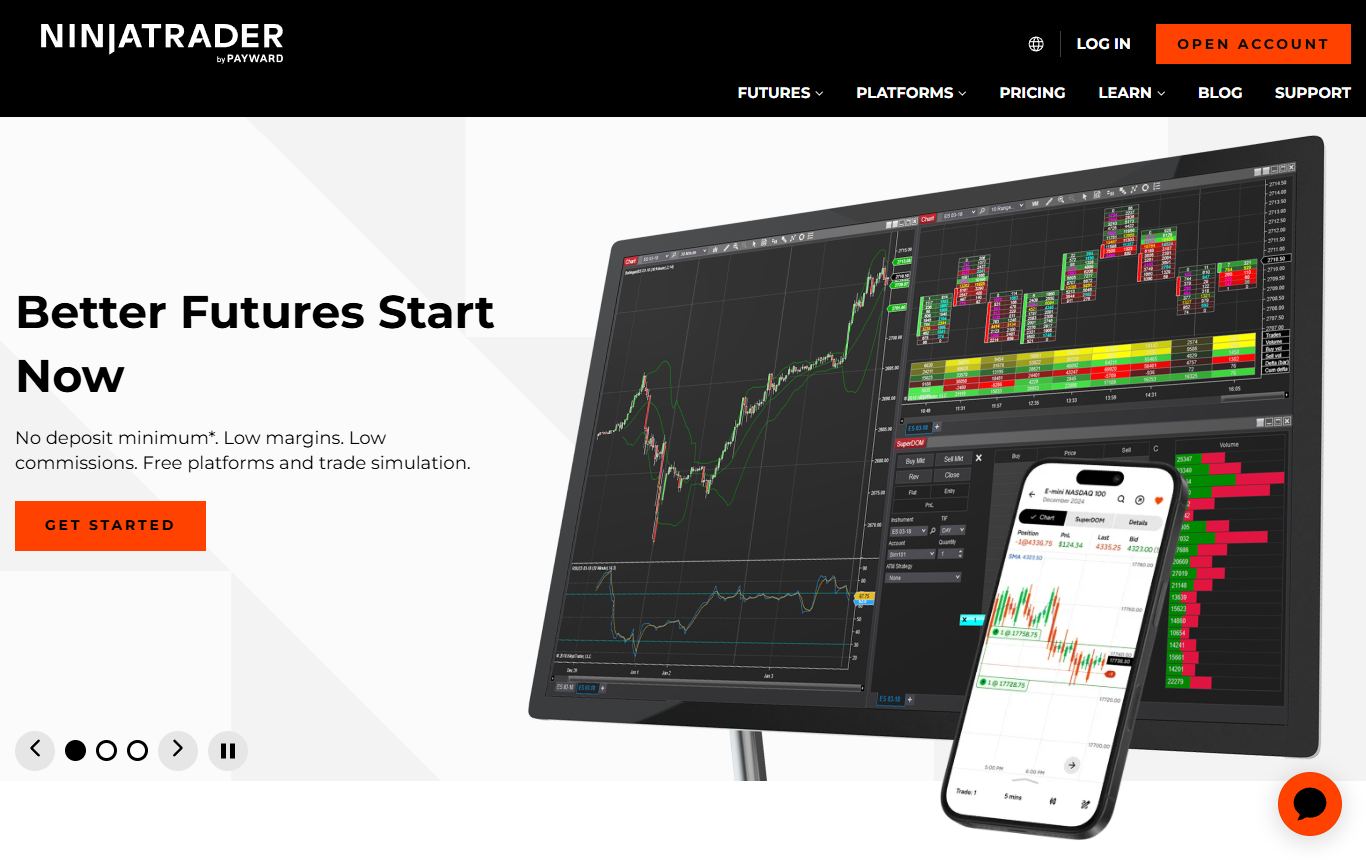
If you trade futures, this is your list of one. Professional charting, serious order flow tools, market replay, and a third-party ecosystem of indicators and strategies that's been compounding for two decades. Discretionary or automated, futures traders are at home here.
The drawbacks: it's a specialist. Equities support feels like an afterthought because it is one, the platform is Windows-centric, and getting everything unlocked means either license fees or a funded brokerage relationship.
5. Webull
The budget answer. Webull's charts are far better than anything free-with-a-brokerage-app has a right to be: plenty of indicators, multi-panel layouts, paper trading. If you're newer and want charts plus execution in one free package, start here and see how far it takes you.
The drawbacks: depth. Scripting, backtesting, advanced drawing, real screening - limited or missing. Most people who chart seriously outgrow it, and they usually know the day it happens.
Bottom line
Match the tool to the job. ChartingLens is the most complete all-around replacement, especially if AI-assisted analysis or backtesting is part of how you work. TrendSpider earns its price if automation is your thing. thinkorswim is unbeatable value inside a Schwab account, NinjaTrader owns futures outright, and Webull covers the basics for free.
All five have free tiers or trials. Put your own tickers on their charts for a week; that beats any review, including this one. And if you're weighing charting platforms more broadly rather than specifically leaving TradingView, I ranked the whole category separately.
Read next
- The Closest TradingView Alternative in 2025-2026 - if you want one answer instead of five.
- Best Charting Platforms for Trading in 2026 - the wider category, TradingView included.
- Best Paper Trading Platforms in 2026 - try the new platform risk-free before committing.