Best Places to Find Trading Ideas
The market has something like ten thousand tickers and you can seriously watch maybe fifteen of them. That gap is the whole game. Where your candidates come from shapes what kind of trader you turn into, and I'd argue most people put way less thought into their idea sources than into their entries.
My own funnel has settled into a handful of places over the years. Some fast and noisy, some slow and heavy. Here are the five I keep coming back to, and, just as important, how each one will burn you if you let it.
1. FinTwit (X)
The finance corner of X is still the fastest information network in trading, full stop. News breaks there before it hits anywhere else, weird market action gets noticed within minutes, and there's a small population of accounts posting charts with actual reasoning attached. Curate hard. Mute freely. Follow people who show their losers, not just screenshots of green days, and your feed turns into a rolling scanner.
How it burns you: speed cuts both ways. By the time something is trending, the easy part of the move already happened. And the loudest accounts are almost never the best traders. I treat FinTwit as a source of candidates. Never conclusions.
2. Reddit's trading communities
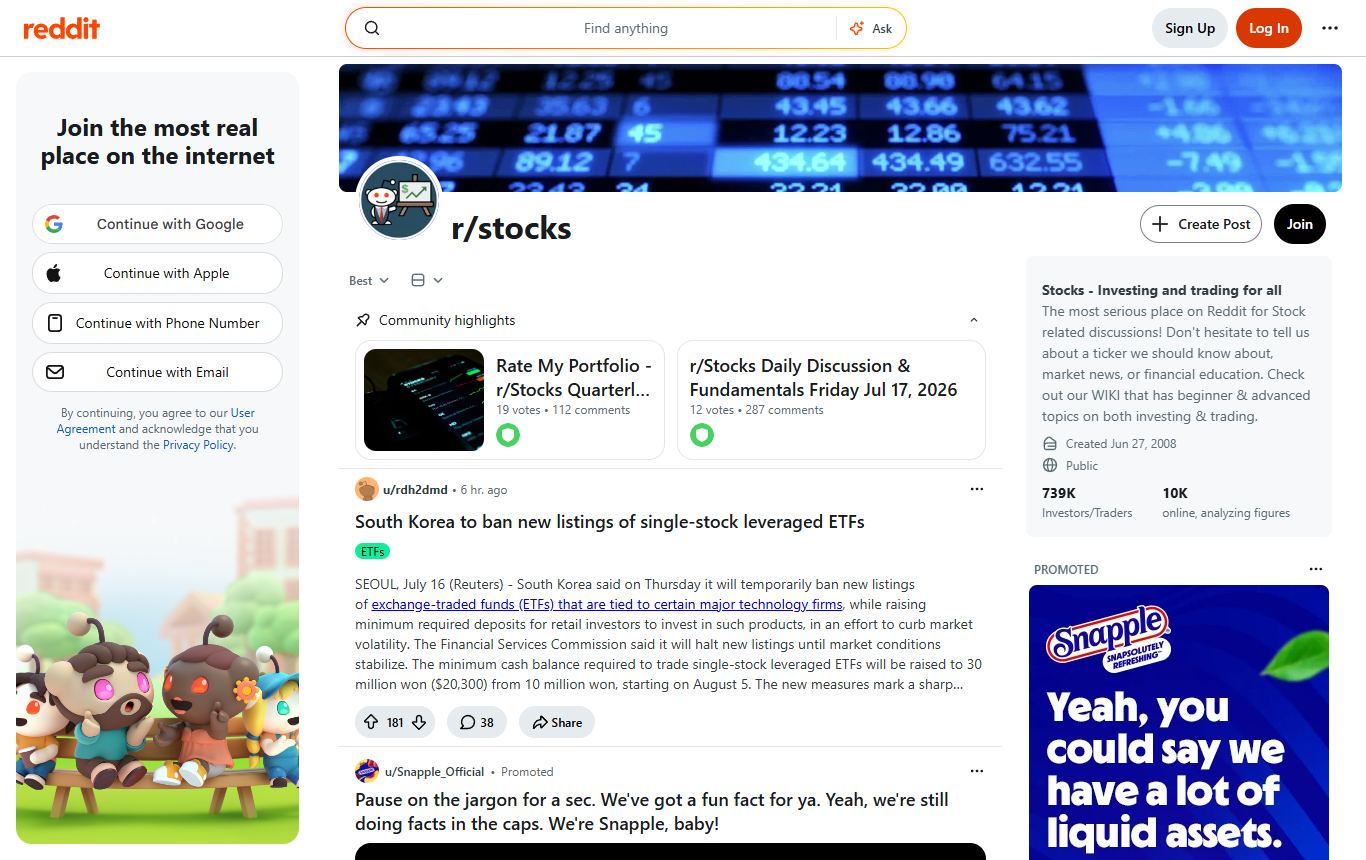
Reddit's reputation is meme stocks, but that's lazy shorthand. Sub-communities like r/stocks and r/investing regularly produce due diligence that's better than a lot of paid research I've read. The real value is in the comments. Post a strong thesis on Reddit and a few thousand skeptics will stress-test it for free within hours. Try getting that from a research subscription.
How it burns you: consensus. Once a ticker becomes a community's darling, objectivity is done, and the dissenting comment that would have saved you money is buried at the bottom. Reddit is for finding the thesis early. If everyone already agrees, you're late.
3. TradingView's Ideas feed
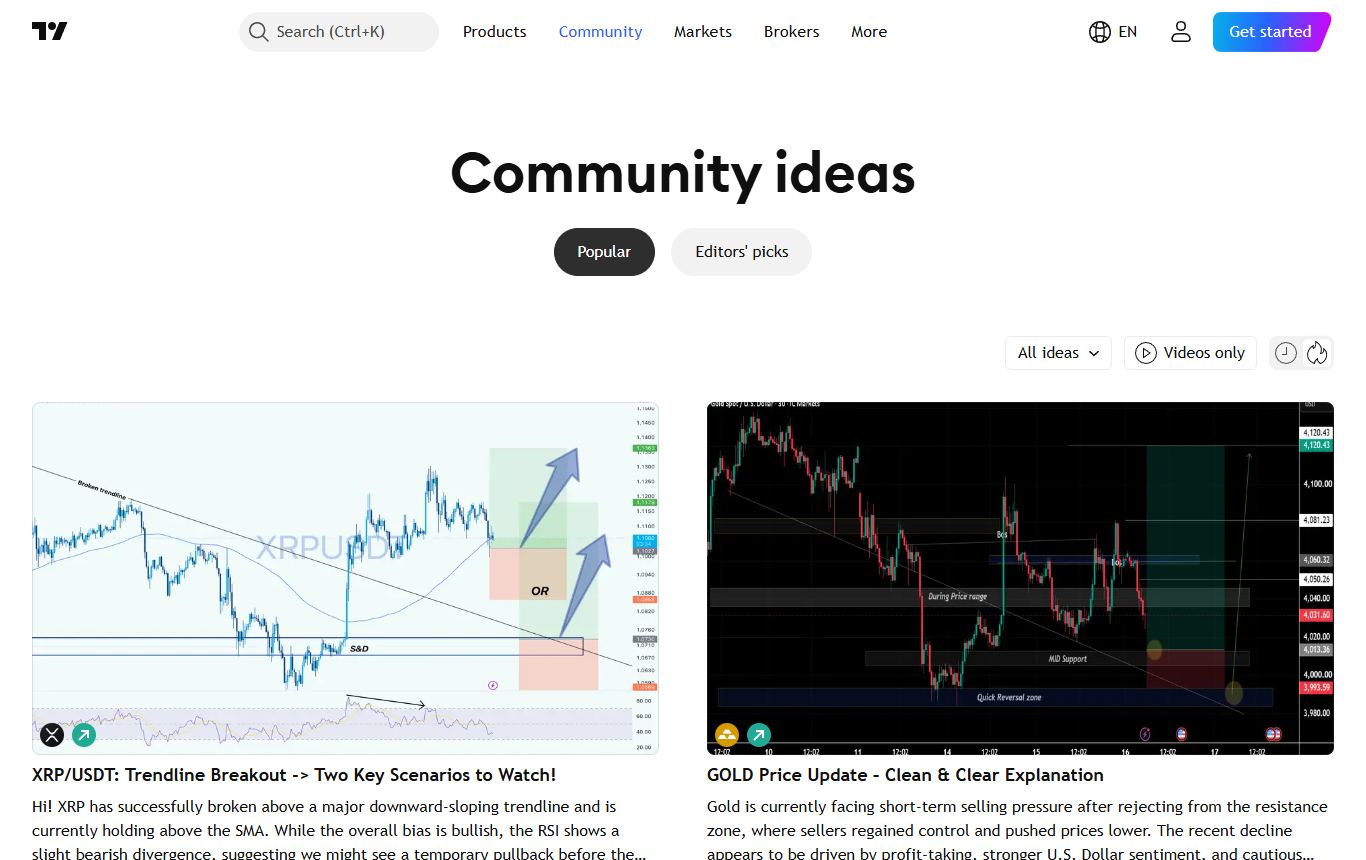
A firehose of annotated charts from traders all over the world, filterable by symbol and timeframe. Where it earns its spot in my rotation: seeing how five different people are drawing the same chart I'm watching. Sometimes they all see the same level, which tells me something. Sometimes they see five different things, which tells me something else.
How it burns you: anyone can publish, and most published ideas are noise. The feed also rewards dramatic calls over disciplined ones, because dramatic gets clicks. Use it to pressure-test your own read. Don't outsource your analysis to it.
4. 13F filings
This one takes more work and pays for it. Every quarter, funds over $100M have to tell the SEC what they hold. The filings are free on EDGAR. Skip the headline positions and read the quarter-over-quarter changes, because that's where the information is: what got built, what got trimmed, what showed up out of nowhere. When two or three managers I respect independently start building the same unloved position, that goes straight onto my research list.
How it burns you: lag. Filings can land 45 days after quarter-end, so you're reading a delayed snapshot, and funds hedge in ways a 13F never shows. This is a source of slow, high-conviction ideas. It will not time anything for you.
5. Seeking Alpha
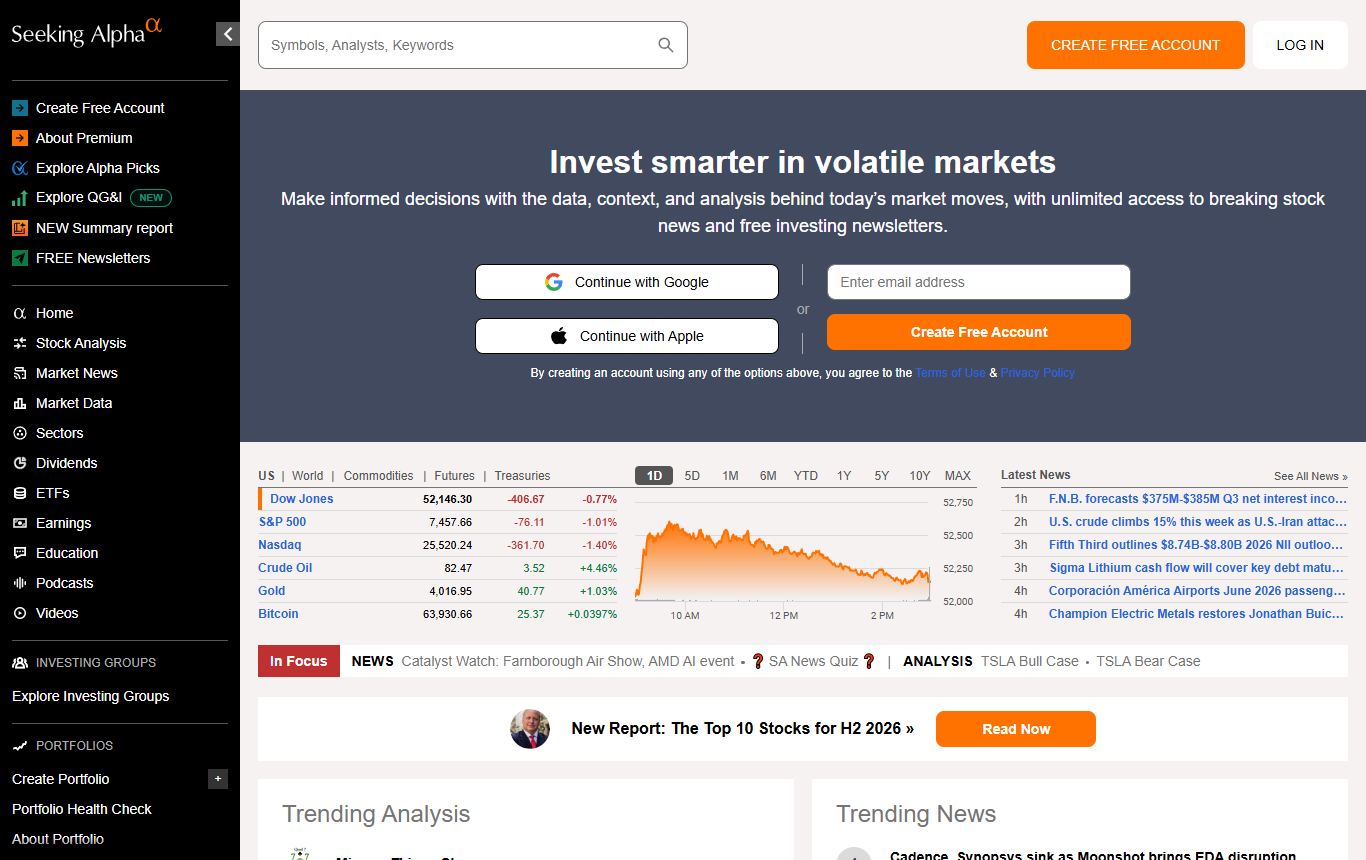
Still the deepest pool of long-form retail research anywhere. Quality swings wildly because anyone can contribute, but the best authors cover companies too small for any bank to bother with, and the comment sections routinely contain a better bear case than the article. The earnings call transcripts alone are worth the visit.
How it burns you: anchoring. A well-written thesis is persuasive even when it's wrong. It's dangerously easy to absorb an author's conviction without doing any of the underlying work yourself. My rule: never act on a Seeking Alpha long without reading the strongest bear take I can find on the same name.
Bottom line
Good traders run a funnel, not a favorite. Fast sources like FinTwit fill the top. Slow sources like 13Fs and long-form research supply conviction. Everything gets filtered through your own charts before a dollar moves, which is why the platform you do that filtering on is its own decision worth making carefully. The idea is where the work starts. It's never where it ends.
Read next
- Best Stock Screeners for Traders in 2026 - the systematic end of the idea funnel.
- Best Trading Journals in 2026 - find out which idea sources actually make you money.
- Best Charting Platforms for Trading in 2026 - where ideas go to be filtered.