Best Trading Journals in 2026
Your broker statement tells you what happened. A journal tells you why. That's the entire pitch, and almost nobody acts on it, because journaling feels like homework and trading is supposed to be the fun part.
I resisted for years. What finally converted me was tagging three months of trades and discovering that one setup, one I liked, accounted for basically all of my losses while feeling great to trade. No amount of chart time was going to surface that. Thirty minutes with tagged data did.
So: five journals, ranked for 2026. The real ranking criterion is blunt. It's whichever one you'll still be filling in six weeks from now, because an abandoned journal has an ROI of zero.
1. TraderSync
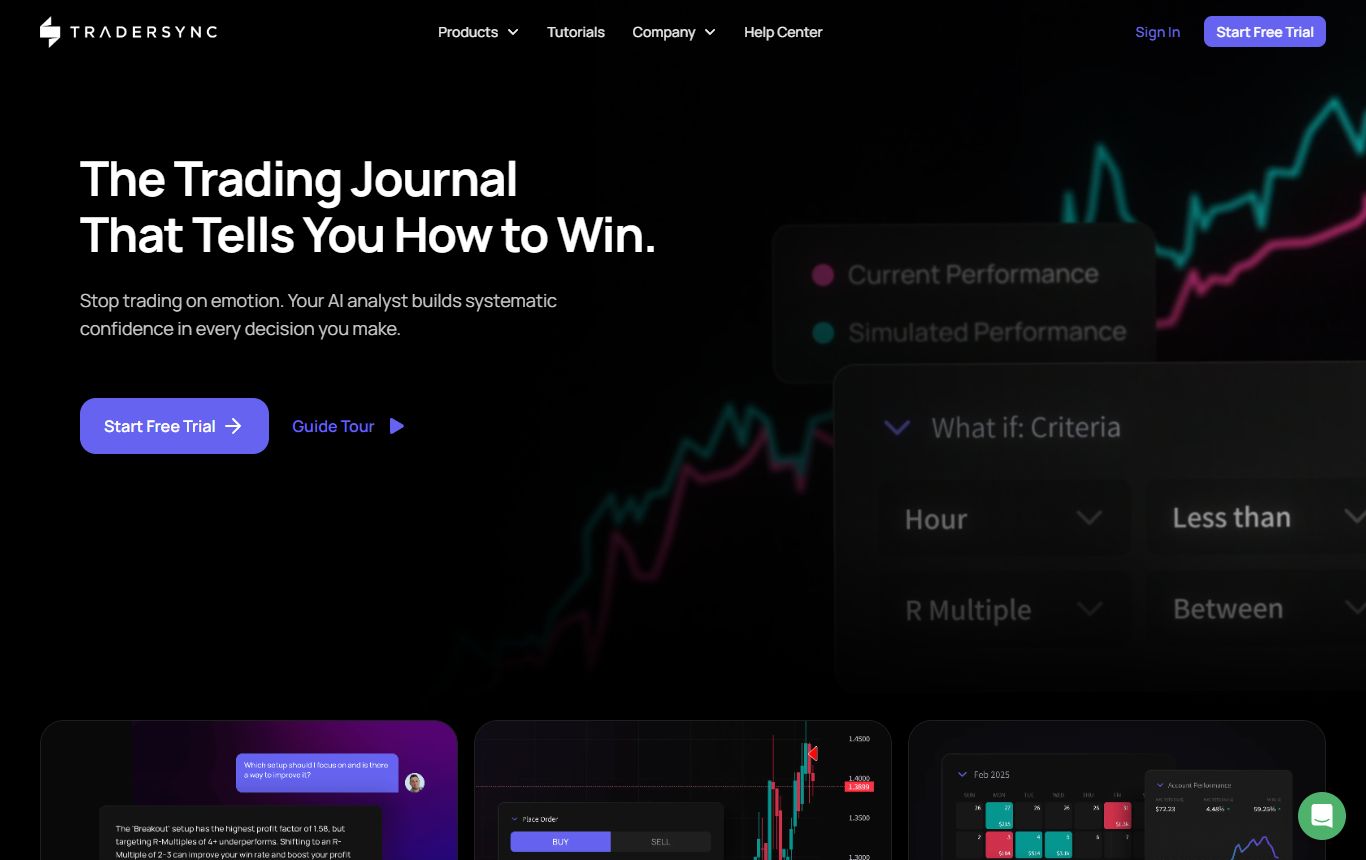
The best all-rounder for most traders. Auto-import from a huge range of brokers actually works, which kills the number-one excuse for quitting. Tag your setups and mistakes, and the reports start answering real questions: which setup carries you, what your average loser costs on which day, what happens to your results after two consecutive losses. The what-if simulations, like "what if I'd cut every loser at 1R," are quietly the most persuasive feature in the entire category.
The catch: it's a subscription, the analytics that make it worth having live on the paid plans, and the dashboard sprawl can seduce you into admiring charts about your trading instead of fixing it. Data is an input to change, not a substitute for it.
2. Edgewonk
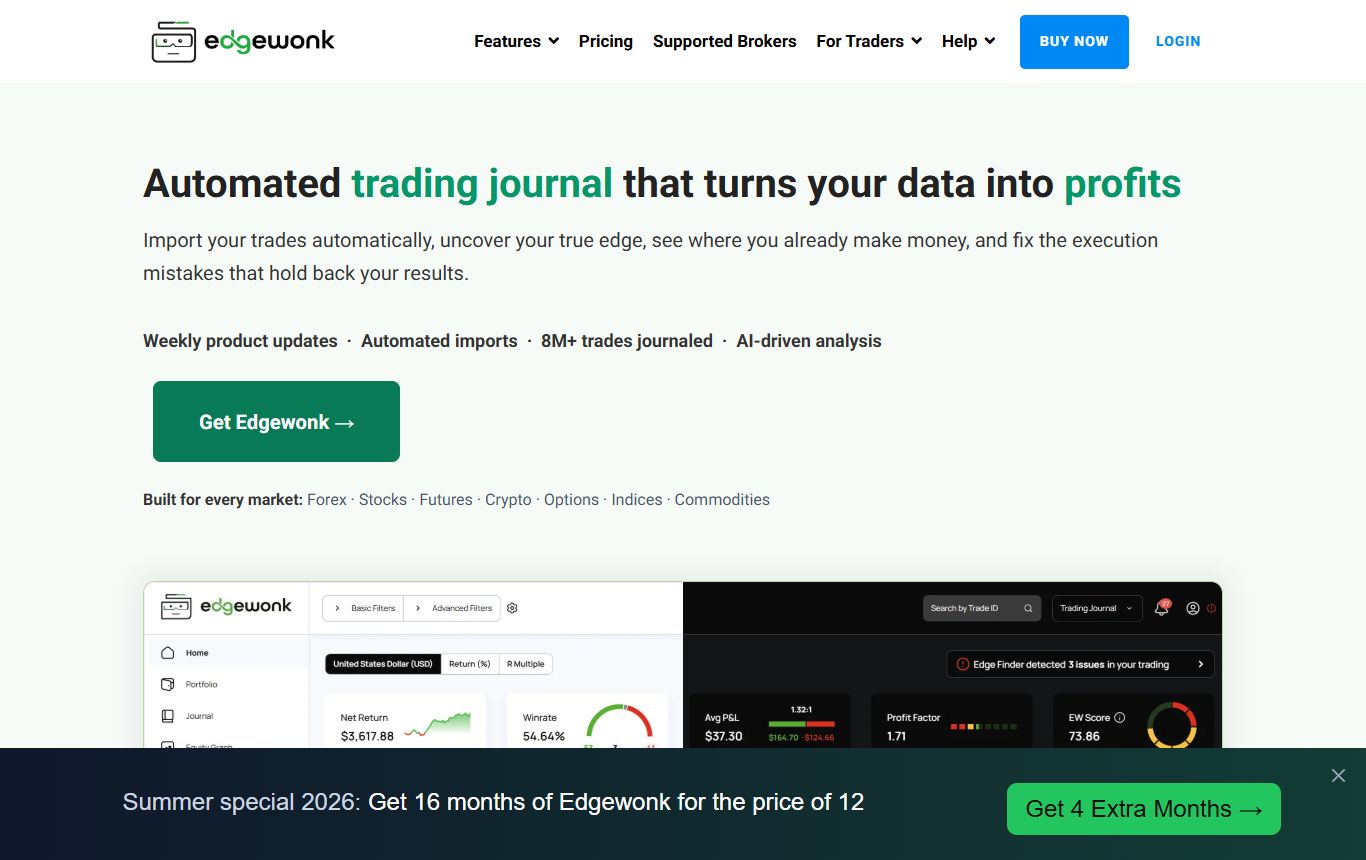
Edgewonk was built by traders with an obsession bordering on clinical: find your edge, find your leaks, in that order. The multi-market support runs from forex to futures to crypto, the psychology-tracking is treated as first-class data rather than a diary gimmick, and the flat yearly pricing is refreshingly honest in a subscription-soaked category. This is the journal for people who want to be interrogated by their own data.
Where it falls short: it expects more manual effort than TraderSync, polish lags the newer entrants in places, and the depth is wasted on anyone who just wants a win-rate widget. It rewards the exact discipline most people are shopping for a shortcut around.
3. TradesViz
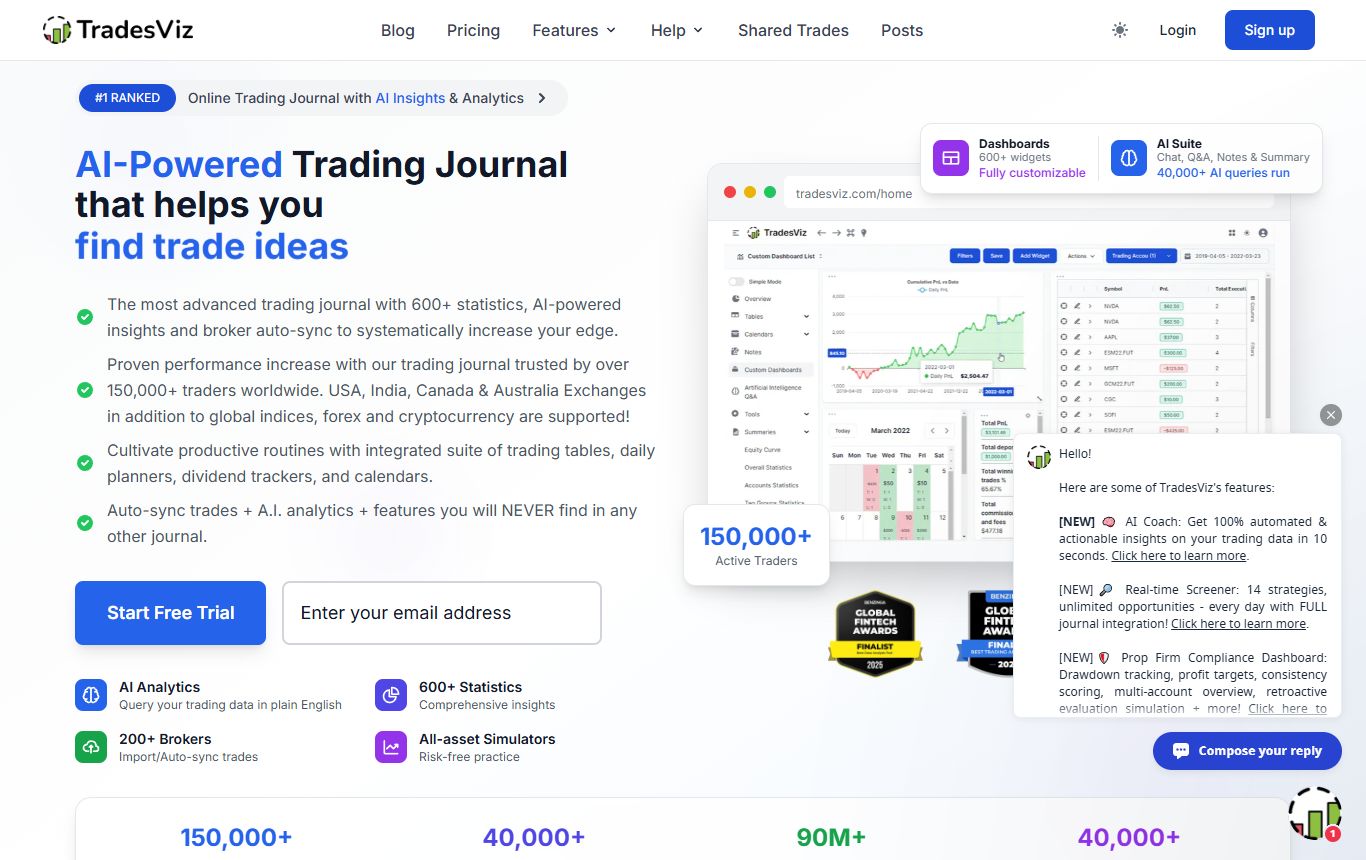
The stats maximalist. Hundreds of statistics, customizable dashboards, AI queries over your own trade history in plain English, and asset coverage that includes basically everything with a price. The free tier is the most generous serious option in the category, which alone earns it this spot. For quantitatively-minded traders it's a playground.
The trade-off: the firehose is the product, and the firehose is the problem. The interface is busy, the option surface is enormous, and it's entirely possible to spend a Saturday building dashboards and learn nothing. Analysis paralysis with your own P&L as the subject.
4. Tradervue
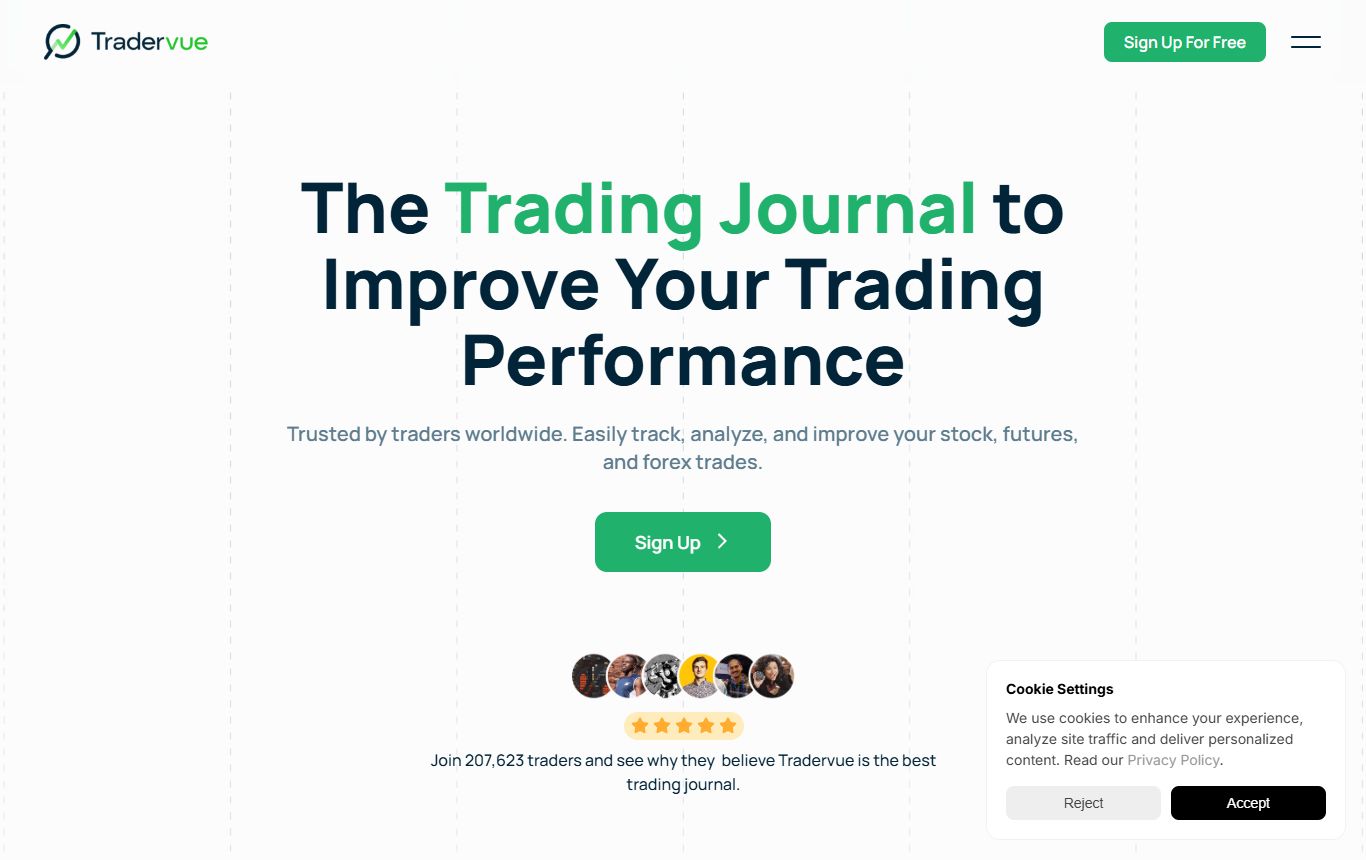
The original online trading journal, and still the cleanest. Execution-level detail on intraday charts, straightforward reports, and a trade-sharing feature that remains the best way to get real feedback from other traders, or to keep yourself honest by knowing someone might look. Day traders with high trade counts are especially well served.
What bugs me: the pace of improvement. The newer competition has lapped it on analytics depth and automation, and the price hasn't adjusted to reflect that. It coasts a little on being the incumbent. Still good. No longer obviously worth it against the three above.
5. A spreadsheet
No screenshot for this one; you know what a spreadsheet looks like. Hear me out anyway. A hand-built journal is free, private, and infinitely yours, and the act of designing the columns forces the question every paid tool answers for you, sometimes wrongly: what actually matters in my trading? Manual entry is slower, and that's partly the point. Typing in a revenge trade is its own small punishment, and more instructive than an auto-import you never look at.
Why most people still shouldn't: the friction that makes it instructive is the friction that makes people quit by week three. No execution charts, no broker sync, no what-if math unless you build it. If you've never journaled, start here for a month to learn what you care about, then buy the tool that tracks it automatically.
Bottom line
TraderSync if you want the best overall package, Edgewonk if you want depth and honest pricing, TradesViz if you want maximum stats for minimum money, Tradervue if sharing and simplicity matter, and a spreadsheet if you're testing whether you'll journal at all. The tool matters far less than the habit. This pairs naturally with paper trading, by the way. A simulator generates cheap reps, and a journal is how the reps turn into lessons.
Read next
- Best Paper Trading Platforms in 2026 - generate the trades your journal will dissect.
- Best Places to Find Trading Ideas - the front end of the same pipeline.
- Best Brokers for Trading in 2026 - since every journal starts with broker data.